---
title: Why Shea Butter Gets Grainy And How to Fix It
description: Explore the science of shea butter crystallization and discover solutions for achieving smoother, more stable cosmetic formulations with AAK's expertise and innovative LIPEX Shea.
image: https://blog.aakpersonalcare.com/hubfs/Figur%202.jpg
---
January 20, 2026
SHARE THIS :
- 
- [ ](https://twitter.com/intent/tweet?url=https://blog.aakpersonalcare.com/why-shea-butter-gets-grainy-and-how-to-fix-it&text=Why%20Shea%20Butter%20Gets%20Grainy%20And%20How%20to%20Fix%20It)
- [ ](http://www.linkedin.com/shareArticle?mini=true&url=https://blog.aakpersonalcare.com/why-shea-butter-gets-grainy-and-how-to-fix-it)
- [ ](hmailto:?subject=Check%20out%20https://blog.aakpersonalcare.com/why-shea-butter-gets-grainy-and-how-to-fix-it%20&body=Check%20out%20https://blog.aakpersonalcare.com/why-shea-butter-gets-grainy-and-how-to-fix-it)
# Why *Shea Butter Gets Grainy * And How to Fix It
At AAK, we know that the texture and stability of cosmetic products is essential. Not just for performance, but for the experience they create. Crystallization in fats and butters, such as shea, is a natural process governed by physical chemistry and is a big part in building texture in a formulation. Understanding this process enables the creation of better products and helps solve challenges for partners and customers.
### Common Challenges in Shea Butter Formulation
Formulators and product developers frequently encounter:
- Graininess and bloom. When crystallization is not well controlled, products may develop grainy textures or visible white spots. This issue affects both large-scale manufacturing and small-batch creation.
- Instability. Over time, crystals can change form, a process known as polymorphic transition, which can alter texture and stability.
- Compatibility. The interaction between shea butter and other oils or fats can influence crystallization, sometimes resulting in unpredictable outcomes.
These challenges are reflected in industry questions, such as how to prevent graininess, which ingredient combinations are most effective, and how to encourage the formation of stable crystal structures.
### Nucleation and Transformation
Nucleation describes the formation of the first tiny crystal seeds as melted fat cools and is one of the most critical factors that influence the look and feel of a product. Rapid nucleation produces many small crystals and a smoother texture. Slow nucleation often leads to the formation of large crystals, which can cause graininess and is often referred to as simply “crystallization” among formulators in the personal care industry.
Traditionally, to achieve fast nucleation in shea butter formulations, it is important to precisely control cooling rates and incorporate agitation during the cooling process. A process which sometimes can be difficult to manage, especially when scaling up production from the lab to large scale production.
Additionally, shea butter and other fats typically first form unstable crystals, which transform into the stable “beta-form” preferred in cosmetics. Slow transformation leads to bigger crystals and rough texture. Once the stable form is reached, no further changes occur unless the crystals are melted. Therefore, locking-in the small crystals in their stable form is optimal to prevent re-crystallization.
### Ingredient Interplay
Ingredient interplay is a crucial aspect of shea butter formulation, as the interaction between shea butter and various oils or fats can dramatically impact crystallization behavior and product performance. For example, blending shea butter with certain liquid oils may slow down nucleation and promote the formation of larger, less stable crystals, leading to graininess. Conversely, some ingredient combinations can help the transformation into the desired crystal form, resulting in a smoother, more appealing texture. Understanding and optimizing these interactions is essential for formulators seeking to create consistently high-quality products.
### LIPEX Shea as a Solution
At AAK, we have seen firsthand how our raw material processing can help address these challenges. LIPEX Shea is an improved shea butter that has enhanced transformation rates into the most stable crystal form. Which can make a real-life difference when working with shea butter alone or in sensitive ingredient blends.
For example, when blending standard shea butter in equal parts with octyldodecanol, we observed bloom, a visible sign of slow crystallization. However, substituting [LIPEX Shea](https://hub.aakpersonalcare.com/lipex-shea) for the standard shea removed the bloom and produced a noticeably smoother and more uniform product as shown in Figure 1. This improvement reflects the less sensitive nature of LIPEX Shea compared to regular shea butters.
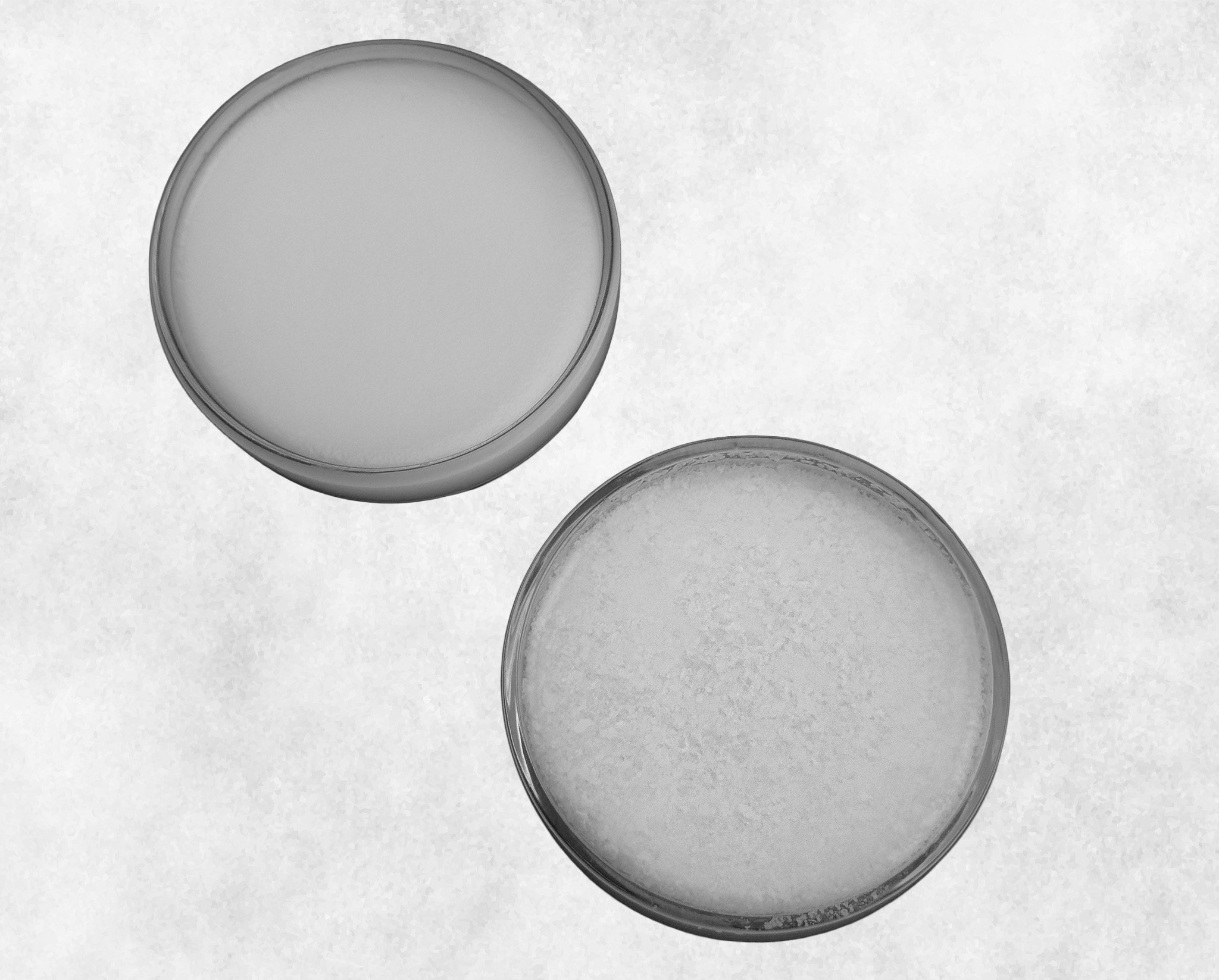
Figure 1
In a similar case, combining standard shea with hydrogenated coconut oil typically results in product bloom, due to the different chain lengths in the triglycerides. Yet, replacing the standard shea with LIPEX Shea eliminated the bloom and created a smooth texture, as seen in Figure 2. Again, the outcome highlights how improved crystallization properties can make a tangible difference. Even when blending two components that usually create issues when combined.
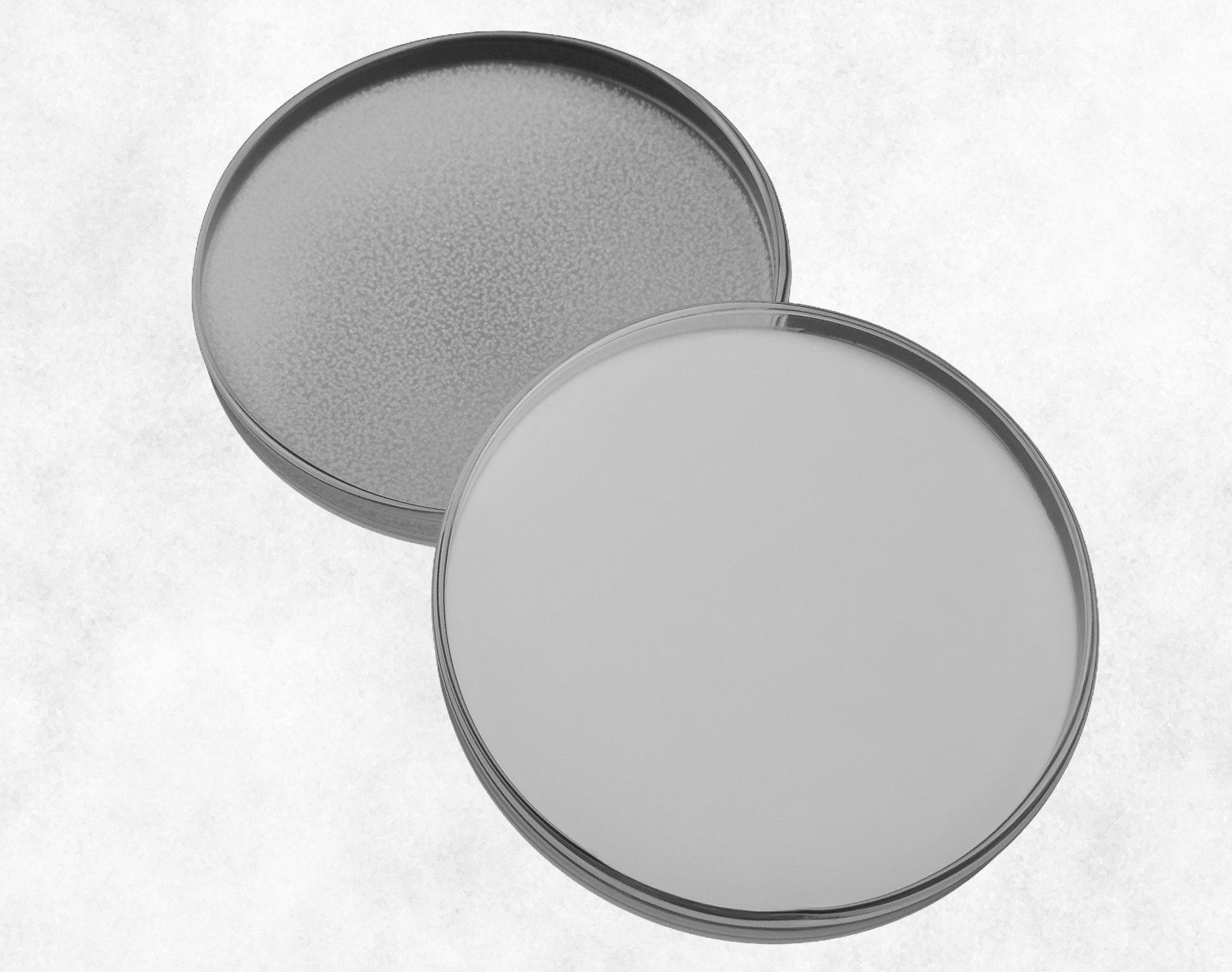Figure 2
### Results and Shared Progress
The observed improvements: firmer texture, reduced graininess, and increased stability, highlight the effectiveness of applying a scientific, evidence-based approach. By carefully selecting and adjusting ingredients based on an understanding of crystallization behavior, formulators can achieve substantial enhancements in product quality.
### Conclusion: Making Better Happen Together
Progress in formulation comes from partnership and insight. Sharing scientific knowledge and practical solutions helps customers and colleagues overcome challenges and create better products. For those facing crystallization issues, reviewing ingredient choices and composition is recommended. Support and expertise are always available.
Join our upcoming webinar
*Innovate with Shea: The impact of the oil phase and practical strategies to prevent grainy formulations* to learn:
- Texture and bloom stability is highly influenced by the rate of crystallization.
- The choice of the liquid oil phase strongly impacts the rate of crystallization, and understanding the polarity of your liquid oil is key.
- Choosing a shea butter with optimized crystallization can reduce the risk for graininess in the formulation.
- Working with a non crystalizing shea, can solve incompatibilities with other oils and fats, such as coconut oil.
[ ](https://blog.aakpersonalcare.com/hs/cta/wi/redirect?encryptedPayload=AVxigLJHv8o31ykTwd4kK6HnK7ZEesohi7vS6S6k3ETc%2BM3j%2Fx10nAb37toZQv%2FwtDYsolrr4zTvT2SLSEVVakrR%2FivUzNkzfdbSJuJokqUKbUPKLZ8czGO7xz1sNnNM5fojprQvHqECUoNYXV3HMyeApM3S7Qy6BpfHHa1EBO5N5jJHargBkTA5FVBeXYhum1SYMl307rK5SMeRCuhIvQir%2FYaJne4%2FxQbduIW%2FJ9KMqhO7K4dSrE57HRxuUcVaPi6vUUJqhOl%2F6Gwcz%2BIgKh8PF0znPo%2FHHtpGkxuiAzJSn5nhN4lZl8B%2FOEZ4Vd5lw1iBAw%3D%3D&webInteractiveContentId=342569277661&portalId=139660859)
[
](https://blog.aakpersonalcare.com/author/johan-pettersson)
### Johan Pettersson
Johan has an engineering degree with a MSc in biotechnology from Lunds Tekniska Högskola, and works as a Product Development Manager at the Scientific Competence Center in Karlshamn, Sweden. He specialises in lipid crystallisation, physical chemistry and surface chemistry. Johan works with product development, troubleshooting and conducts research in the area of lipid crystallisation.
```json
{
"@context" : "https://schema.org",
"@type" : "BlogPosting",
"author" : {
"@type" : "Person",
"name" : "Johan Pettersson",
"url" : "https://blog.aakpersonalcare.com/author/johan-pettersson"
},
"dateModified" : "2026-01-20T09:05:27.221Z",
"datePublished" : "2026-01-20T09:05:27.000Z",
"headline" : "Why Shea Butter Gets Grainy And How to Fix It",
"image" : [ "https://blog.aakpersonalcare.com/hubfs/Figur%202.jpg" ],
"mainEntityOfPage" : {
"@id" : "https://blog.aakpersonalcare.com/why-shea-butter-gets-grainy-and-how-to-fix-it",
"@type" : "WebPage"
},
"publisher" : {
"@type" : "Organization",
"logo" : {
"@type" : "ImageObject",
"url" : "https://blog.aakpersonalcare.com/hubfs/aak_logo-3.svg"
},
"name" : "AAK Personal Care"
}
}
```